
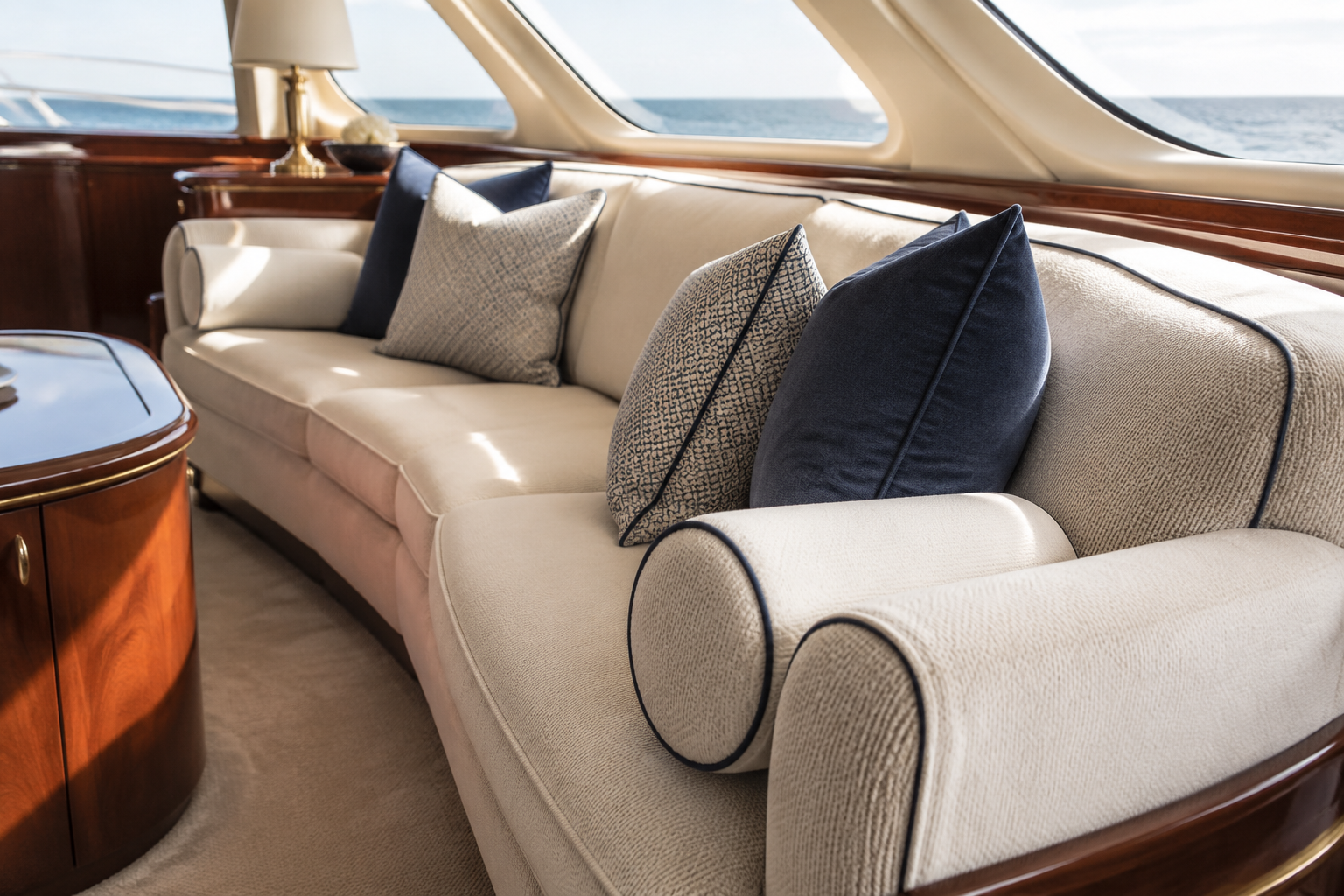
Begin with the complete interior
A successful yacht interior refit is more than a collection of separate purchases. Upholstery, flooring, headliners, wallcoverings, blinds, mattresses and bedding all meet one another visually and physically. Planning them together makes it easier to control color, texture, clearances, installation order and the overall standard of finish.
The first working document should identify every space, product category, decision-maker and access constraint. This gives the owner and project team one clear view of the scope before materials are ordered or fabrication begins.
Sequence work around the vessel
Marine interiors offer limited staging space, sensitive finished surfaces and systems that must remain accessible. Flooring, wall finishes, cabinetry work and upholstery should be sequenced to prevent unnecessary removal, reinstallation or damage.
- Confirm demolition and surface preparation first
- Complete concealed electrical or mechanical work before finish installation
- Template only after surrounding geometry is stable
- Protect completed surfaces through final installation
Use samples as a complete palette
Review samples together under the yacht’s actual lighting. A fabric, wallcovering or flooring material can read differently under warm recessed lighting than it does in a showroom. Evaluating the full palette aboard also reveals whether textures compete or work together.
- Upholstery and piping
- Flooring and edge details
- Headliner and wallcovering
- Shade fabrics
- Bedding and decorative accents
Define approval points
A well-run refit establishes approval points for materials, templates, shop drawings, fabrication details and final installation. This protects the design intent and keeps production moving without creating last-minute uncertainty.